resources
Featured Readings
Testing Quantum Reality in Time
Based on: Investigation of the Leggett-Garg Inequality for Precessing Nuclear Spins
This pioneering work explores how quantum systems challenge classical intuitions about reality evolving through time. Using nuclear-spin dynamics, it examines the Leggett–Garg inequality at the interface of quantum foundations and quantum information.
Quantum Ideas in Economics and Finance
Based on: Quantum Modelling of Economic and Financial Systems
This Cambridge monograph opens a rigorous interdisciplinary pathway between quantum physics and the socio-economic world. It examines how concepts from quantum theory can inform modelling in economics, finance, and decision-related processes.
Physics and Reality: Towards a Unified View
Based on: The IOP piece on eliminating the discrepancy between “physics” and “reality”
This article reflects on a foundational question: should physics be seen as merely a discipline among others, or as part of a broader effort to understand reality in its full scope? It argues for a more unified and all- inclusive conceptual view.
Beneath Randomness: A Quantum View of Stochasticity
Based on: Quantum causality beneath classical stochasticity
This recent work asks whether classical stochastic processes may, in some cases, be better understood through a deeper quantum-causal perspective. It opens a fresh route for thinking about randomness, process, and explanation across domains.
Causality, Ensembles, and the Social World
Based on: Causal viewpoint and ensemble interpretation: from physics to the social sciences
This article extends key physical notions such as causality and ensembles into socially analogous settings. It explores how ideas originating in physics may help illuminate social and decision-related processes more deeply.
Beyond Quantum-Like Mathematics
Based on: Socio-Economic Sciences: Beyond Quantum Math-like Formalisms
This paper argues that the socio-economic sciences may benefit not only from borrowing quantum-style mathematics, but also from engaging with the physical foundations of quantum theory. It introduces a more exhaustive, quantum-physics-analogous approach.
All blogs
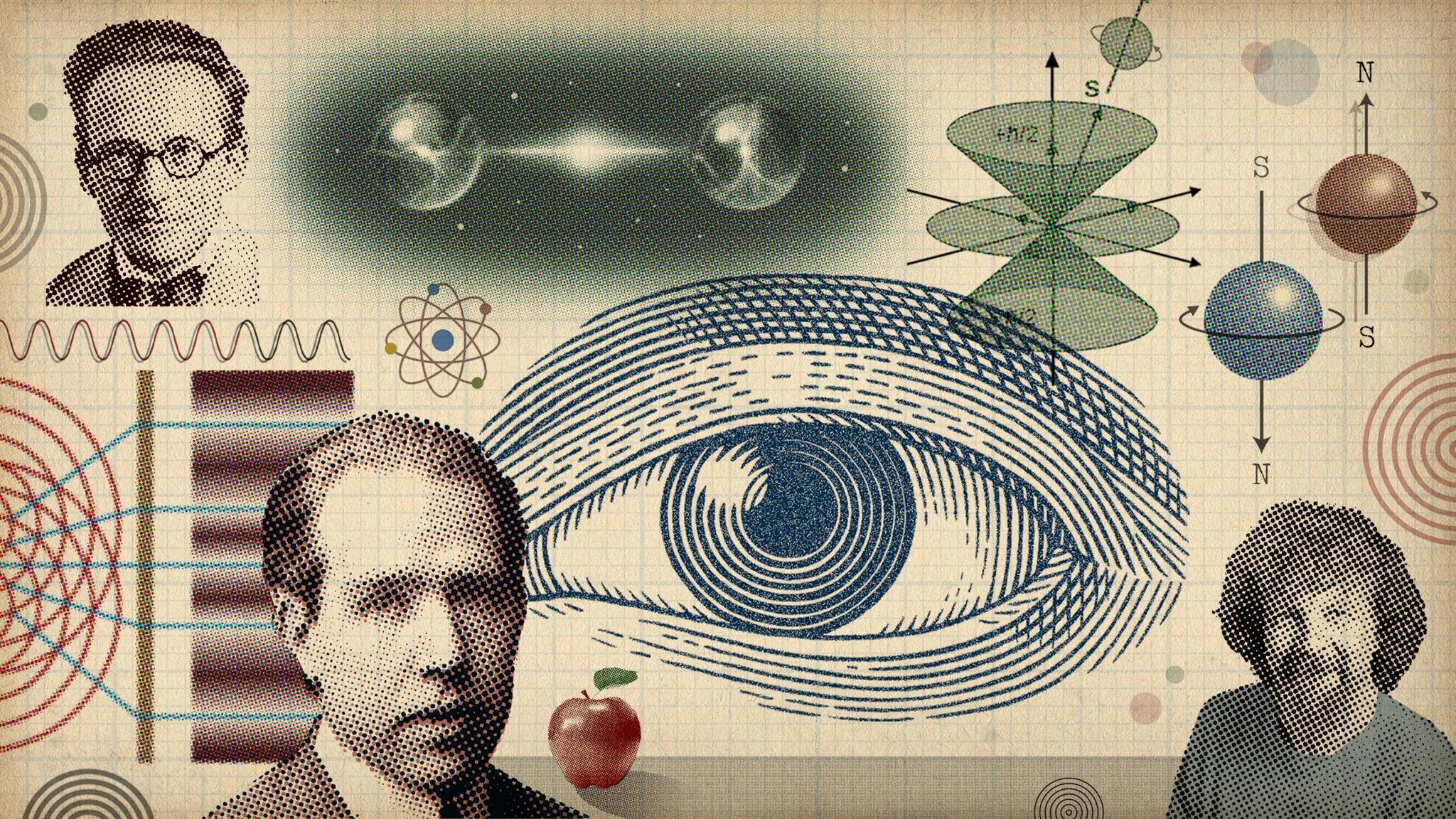
How Questions Lead to Paradigms
By Dr. Vikram Athalye April 15, 2026
Abstract: Beginning with ordinary experiences in nature, this essay reflects on how our “how” and “why” questions gradually lead us toward deeper laws of nature. It offers a gentle introduction to the idea of a scientific paradigm and the broader structure of a physics worldview.

Reality and the Limits of a Model
By Dr. Vikram Athalye April 15, 2026
Abstract: Using the famous Magritte pipe painting as an entry point, this essay explores a subtle but essential distinction: a model of reality is never identical to reality itself. It also develops the striking idea that modelling reality is itself a part of reality.

From the Known to the Unknown
By Dr. Vikram Athalye April 15, 2026
Abstract: Inspired in part by Feynman’s reflections, this piece asks how science moves from what is already known to what still lies beyond current understanding. It presents this movement as a creative and plural process, while stressing that deeper knowledge should consistently encompass what was known before.

Butterflies, Motion, and the Relativity of Space — Part I
By Dr. Vikram Athalye April 15, 2026
Abstract: Through an imaginative historical arc from Aristotle to Galileo, this essay introduces changing ideas about space and time. The image of butterflies flying inside a moving ship becomes a vivid way to begin thinking about relativity and the breakdown of absolute space.
Butterflies, Motion, and the Relativity of Space — Part II
By Dr. Vikram Athalye April 15, 2026
Abstract: Continuing the butterfly-on-the-ship story, this article explains Galileo’s principle of relativity in an intuitive way. It shows why no experiment inside a uniformly moving system can reveal that motion, and how this insight reshaped our understanding of space.

The Coffee Mug and the Meaning of Realism — Part I
By Dr. Vikram Athalye April 15, 2026
Abstract: Starting from the simple fact that everyday objects seem to exist whether or not we look at them, this essay introduces the physical notion of realism. It then opens the deeper question of whether reality should be understood as “local” or as involving “spooky” action at a distance.
The Coffee Mug, Light, and Local Reality — Part II
By Dr. Vikram Athalye April 15, 2026
Abstract: This follow-up piece explains why seeing an object is not instantaneous, but involves light travelling from the object to the observer. In doing so, it offers an accessible introduction to Einstein’s notion of local realism and to the role of the speed of light in shaping physical causation.

From Local Realism to Causality — Part I
By Dr. Vikram Athalye April 15, 2026
Abstract: This essay connects three major ideas — realism, locality, and determinism — and shows how together they contribute to the classical notion of causality. With simple examples from everyday life, it prepares the reader for a broader historical and conceptual discussion of causal explanation in physics.
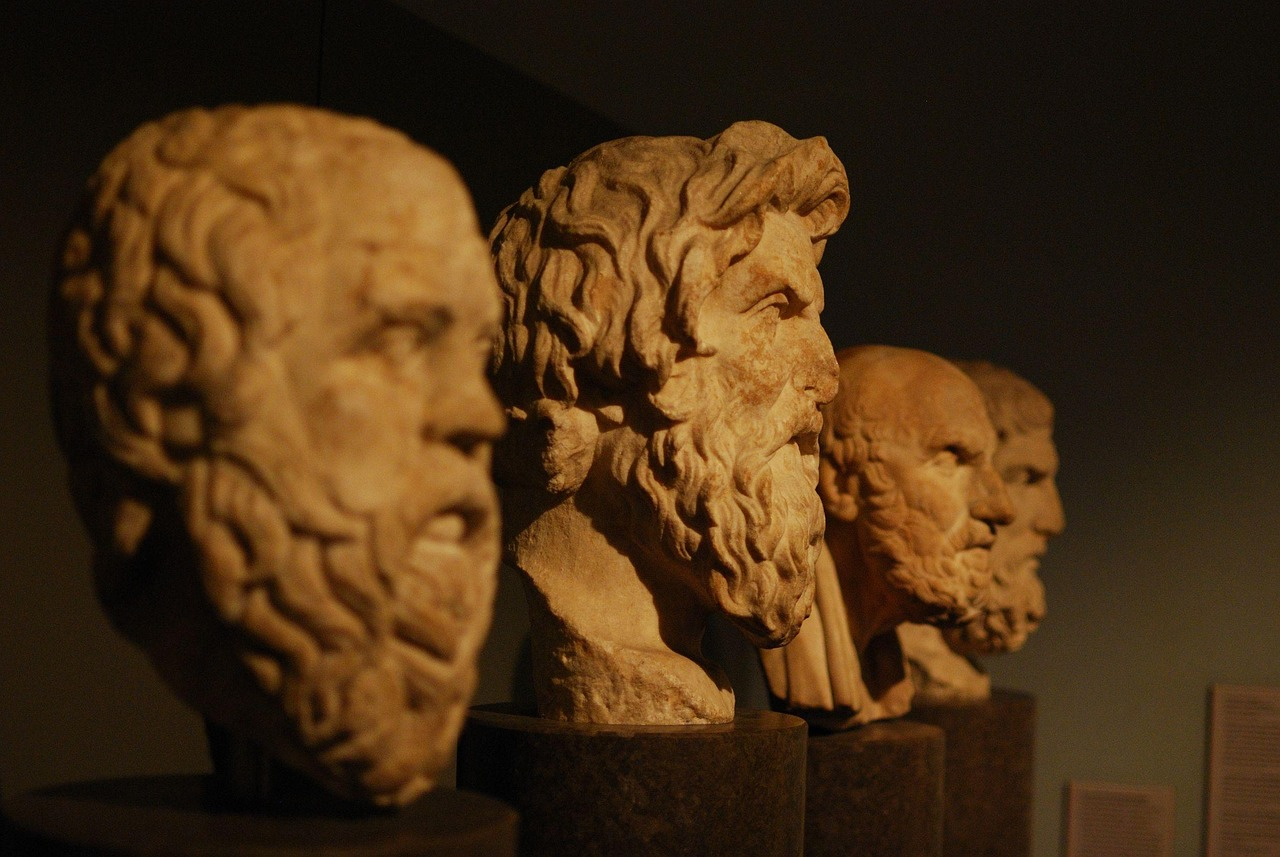
Aristotle’s Four Causes and the Growth of Explanation — Part I
By Dr. Vikram Athalye April 15, 2026
Abstract: Returning to ancient thought, this article introduces Aristotle’s famous four kinds of cause — material, formative, efficient, and final. Through examples such as a bronze statue and a growing tree, it shows how early philosophy approached the question of why things happen.

Eclipse, Prediction, and the Modern Meaning of Causality — Part III
By Dr. Vikram Athalye April 15, 2026
Abstract: Using the example of a lunar eclipse, this piece explains how modern science extends older causal ideas into questions of prediction, timing, and physical law. It offers a readable bridge from ancient natural philosophy to the deterministic structure of modern physics.
FAQs
Are all programs highly technical?
Not necessarily. The aim is not to begin with technical overload, but to build deep qualitative intuition first. Some programs may become more advanced, but the broader emphasis is on clarity, structure, and meaningful understanding.
Why do physics and the social sciences appear together here?
A central idea behind QuantumCognate is that concepts developed in physics — such as systems, states, causality, uncertainty, and process — may also help illuminate phenomena in economics, cognition, decision-making, and other complex domains.
Do I need a physics background to benefit from these programs?
Not necessarily, though a senior high-school level familiarity with physics would be helpful. The courses within these programs will be designed to be self-contained, with prerequisite lectures and supporting study material wherever needed. While the perspective is physics-first, the broader goal is
to help learners from varied backgrounds develop a more rigorous and insightful way of thinking about systems across domains.
Are these resources meant only for physicists?
No. Some resources are academic, but the section is designed for a broader audience as well — including researchers, professionals, educators, and curious readers interested in systems, causality, uncertainty, and interdisciplinary thinking.
What is the difference between “Articles” and “Blogs”?
“Articles” highlight formal publications and substantial written work. “Blogs” feature shorter reflections, updates, and accessible commentary shared through public platforms such as LinkedIn.
Are all resources free to download?
Not always. Some items link directly to open-access PDFs, while others lead to publisher pages or external platforms depending on access permissions.
Is this a coding or implementation service?
No. QuantumCognate does not primarily operate as a coding, deployment, or vendor-led implementation service. Its role is to help decision-makers and institutions think more clearly about the nature, suitability, limits, and responsible use of AI.
Can I use these resources as a starting point for collaboration or consultancy discussions?
Yes. The Resources section is also a way to understand the conceptual style and research direction behind QuantumCognate’s academic, educational, and advisory work.